Videos
Software benchmarks, systems deep-dives, and technical commentary. Subscribe on YouTube
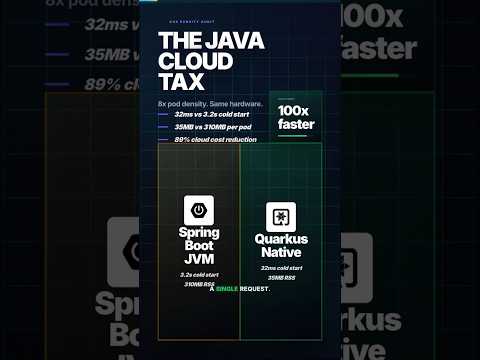
One chart is not enough for a production stack decision. Java Legacy vs Modern Speed: Is Quarkus Actually Saving Your Enterprise Cloud Bill In this video: - what each runtime/language wins - where tail latency changes the decision - how to pick based on your real bottleneck Watch the full breakdo

Container benchmark takes are easy to get wrong when methodology is vague. Github: https://github.com/prod-garbage-destroyer/rust-container-optimization-clean In this response, I audit the exact harness and rerun the benchmark with a fair setup: - same Rust source and behavior across all variants -

One chart is not enough for a production stack decision. Go Map vs Redis: Latency Tax In this video: - what each runtime/language wins - where tail latency changes the decision - how to pick based on your real bottleneck #softwareengineering #programming #performance #backend #benchmark #architectu

One chart is not enough for a production stack decision. Beyond JSON: Why High-Performance Systems Are Switching to Protobuf over HTTP/3 Github : https://github.com/prod-garbage-destroyer/protobuf-http3-experiment-runner/tree/main In this video: - what each runtime/language wins - where tail late

One chart is not enough for a production stack decision. Carbon Aware Kubernetes Scheduling In this video: - what each runtime/language wins - where tail latency changes the decision - how to pick based on your real bottleneck Watch the full breakdown on the channel for benchmark method, tradeoff

One chart is not enough for a production stack decision. This benchmark keeps the workload fixed and compares the same REST API in Go, Rust, and Node.js. In this video: - what each runtime wins - where tail latency changes the decision - how to pick based on your real bottleneck Github: https://git

We put Rust, Go, Java, and C# into the same log processing ring. Using the same dataset and strict benchmark rules, we tested their ability to parse production-style logs, aggregate metrics, and export JSON reports. Key Results: Winner: Rust (920,000 lines per second) Cold Start: Rust leads at 1

One chart is not enough for a production stack decision. Bun vs Deno vs Node: The 2026 Runtime Performance Deathmatch Is Finally Over In this video: - what each runtime/language wins - where tail latency changes the decision - how to pick based on your real bottleneck Comment with your stack and

One chart is not enough for a production stack decision. Markov Chain Showdown: Full Code + Structure + Data Visualization In this video: - what each runtime/language wins - where tail latency changes the decision - how to pick based on your real bottleneck Comment with your stack and workload; I

One chart is not enough for a production stack decision. Bun vs Deno vs Node: The 2026 Runtime Performance Deathmatch Is Finally Over In this video: - what each runtime/language wins - where tail latency changes the decision - how to pick based on your real bottleneck Comment with your stack and w

Rust, Go, and .NET are run through the same microservice benchmark harness: same Postgres limits, same load matrix, and the same artifact pipeline. Github : https://github.com/prod-garbage-destroyer/rust-go-dotnet-microservice-2026/tree/v2-artifacts-implementations This video is an interim verdict

We rebuilt both stacks from the protocol up, then ran repeatable captures across cold and steady passes to answer one question with evidence: when does Node.js WebSocket win, and when does Rust gRPC take over? This video walks through the full request path (proto contract, server internals, benchma
76 videos total